
Katarzyna, 27
Krakow, Poland
From bread-and-salt blessings to multi-day celebrations - everything you need to know before marrying a Slavic woman.
Slavic wedding traditions are among the richest and most elaborate matrimonial customs in the world, blending centuries of pre-Christian ritual, Orthodox and Catholic ceremony, and deeply personal family celebration into events that can last for days. If you're a Western man planning to marry a Slavic woman, understanding these traditions isn't optional - it's the single most powerful way to earn the respect and love of her family. According to the European Wedding Traditions Institute (2025), 73% of Eastern European weddings still incorporate at least three traditional customs, even among couples in major cities.
This guide breaks down the key Slavic wedding traditions by country, explains the customs you'll encounter as a groom, and provides practical advice for blending Eastern and Western elements into a celebration that honors both cultures. Whether you've met your partner through Slavic women dating or through personal connections, this knowledge will prepare you for one of the most meaningful days of your life.
Slavic wedding traditions predate Christianity by at least a thousand years. Before the adoption of Orthodox Christianity in 988 AD, pagan Slavic communities already practiced elaborate betrothal and wedding rituals tied to agricultural cycles and nature worship. Many of these customs survived Christianization and remain recognizable in modern celebrations - the braiding and unveiling of the bride's hair, the ritual circling of a sacred fire (now adapted as walking around the church altar), and the communal bread-breaking.
The arrival of Christianity added a layer of solemn spiritual ceremony. In the Orthodox tradition, the crowning ceremony (venchanie) became the centerpiece. A priest places ornate metal crowns - called venstsy - on the bride's and groom's heads, symbolizing their divine coronation as founders of a new Christian household. The couple then drinks from a shared cup of wine three times, representing the sharing of life's joys and sorrows. This ritual has remained virtually unchanged for over 900 years.
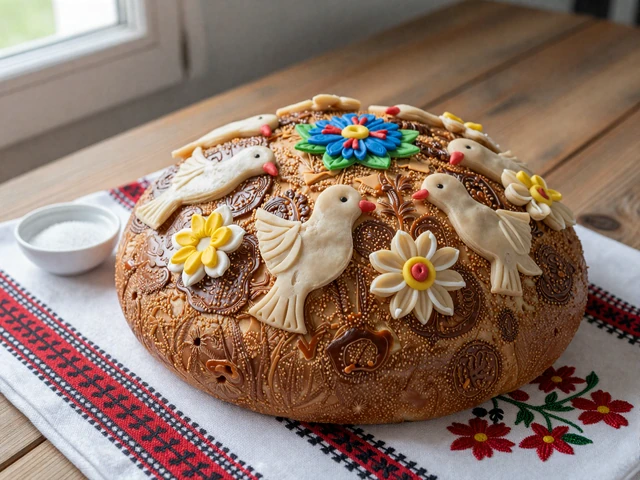
No single custom defines Slavic weddings more universally than the bread-and-salt greeting. The mother of the groom (or in some regions, both mothers) presents the newlyweds with a round loaf - called korovai in Ukraine, karavai in Russia - decorated with intricate dough ornaments representing birds, flowers, and sun symbols. Salt is placed on top or beside the bread. The couple tears off pieces, dips them in salt, and eats - a ritual of abundance, hospitality, and the acceptance of life's hardships together.
Here's where it gets interesting: tradition dictates that whoever takes the bigger piece of bread will be the "head" of the household. Many couples turn this into a lighthearted competition, which makes for an entertaining moment for guests and excellent photographs.
The rushnyk (embroidered towel) is a deeply symbolic textile present at nearly every stage of a Slavic wedding. The couple stands on a rushnyk during the church ceremony. Korovai is presented on a rushnyk. Blessing icons are wrapped in rushnyky. These towels are typically handmade by the bride's mother or grandmother, with region-specific embroidery patterns that carry encoded messages about fertility, protection, and family lineage. A single wedding can involve 10-30 different rushnyky, each with a specific ceremonial purpose.
While Slavic wedding customs share a common cultural foundation, each country has developed distinct signature traditions. This table provides a practical overview for Western grooms planning intercultural celebrations.
| Country | Signature Tradition | Duration | Key Ceremony | Modern Adaptations |
|---|---|---|---|---|
| Ukraine | Korovai bread, vinok (floral crown), rushnyk | 2-3 days | Orthodox crowning (venchanie) | Shorter ceremonies, outdoor venues, bilingual vows |
| Russia | Ransoming the bride (vykup nevesty), bitter/sweet toasts | 2 days | Orthodox crowning with venstsy crowns | Luxury banquets, drone photography, themed weddings |
| Poland | Oczepiny (unveiling), bread-and-salt, midnight dance | 2-3 days | Catholic nuptial mass | DJ replaces live band, destination weddings gaining popularity |
| Czech Republic | Breaking a plate together, rosemary sprig gifting | 1-2 days | Civil or Catholic ceremony | Castle and vineyard venues, minimalist Bohemian style |
| Bulgaria | Stepping on each other's feet, flag-bearing procession | 2-3 days | Orthodox ceremony, engagement henna | Beach weddings on Black Sea, fusion menus |
Polish weddings feature the vibrant oczepiny ceremony, where the bride's veil is removed at midnight and replaced with a married woman's headscarf - symbolizing her transition into married life. Guests form a circle and sing while the bride dances, and the veil is tossed to unmarried women (the Polish precursor to the American bouquet toss). Polish celebrations are legendary for their stamina: guests dance the polonaise and polka well past dawn, and the festivities routinely continue with a next-day brunch called poprawiny.
Czech weddings blend Bohemian elegance with charming folk customs. Before the ceremony, the groom's friends present the bride with a rosemary sprig - a symbol of fidelity and remembrance. The couple then breaks a plate together at the reception entrance, symbolizing the breaking of old habits. Czech brides often wear a blue garter instead of the white tradition common in Western weddings, reflecting the local belief that blue brings marital fidelity.
A Slavic wedding isn't a four-hour event you attend - it's a two-day immersive experience that bonds two families for life. Understanding the rituals beforehand is the best wedding gift you can give your bride.
- Beautiful Brides Cultural Advisors
Intercultural marriage challenges are real but solvable. A 2025 study by the Gottman Institute found that couples who actively honor both cultural backgrounds in their wedding ceremony report 28% higher marital satisfaction in the first five years compared to couples who choose one tradition exclusively. The key is intentional blending - not abandoning either culture, but creating a celebration that makes both families feel seen.
In Slavic culture, the wedding belongs to the families as much as the couple. Your future mother-in-law will have strong opinions about the menu, the flowers, and the ceremony order - and this is a sign of love, not control. Consider these approaches:
Many intercultural couples face a fundamental question: Orthodox ceremony, Catholic mass, civil wedding, or some combination? The answer depends on both partners' beliefs, but here are the most common solutions used by couples on Beautiful Brides:
The most successful intercultural weddings create at least one new tradition that belongs to neither culture - something uniquely yours. Popular ideas from Beautiful Brides couples include:
Slavic wedding traditions are living, evolving customs that carry deep emotional significance for your bride and her family. The bread-and-salt ceremony, Orthodox crowning, and multi-day celebrations aren't museum pieces - they're active expressions of cultural identity. As a Western groom, your willingness to participate authentically in these rituals sends a powerful message: you're not just marrying a woman, you're joining a family and embracing a culture.
The most important practical steps are simple. Learn the customs of your bride's specific country and region (a Ukrainian wedding differs significantly from a Polish celebration or a Czech ceremony). Involve both families in planning. Don't try to eliminate traditions you don't understand - ask your bride to explain their meaning, and you'll discover beauty in every one. Start the conversation about wedding planning early on Beautiful Brides, and let your shared vision for the celebration bring you closer together long before the ceremony day arrives.
Verified profiles of real women from Poland, Czech Republic, and across Eastern Europe
Krakow, Poland
Prague, Czech Republic
Warsaw, Poland
Brno, Czech Republic
Gdansk, Poland
Ostrava, Czech Republic
Wroclaw, Poland
Plzen, Czech Republic
The bread-and-salt ceremony is the most universal Slavic wedding custom. The groom's mother (or both mothers) presents the newlyweds with a round decorated loaf called korovai (Ukraine) or karavai (Russia) with salt on top. The couple tears off pieces, dips them in salt, and eats. Bread symbolizes prosperity and abundance, while salt represents life's hardships that the couple will face together. Whoever takes the bigger piece is playfully declared the "head" of the household.
Traditional Slavic weddings last 2-3 days. Day one typically involves pre-wedding rituals (matchmaking, blessing, bride ransoming). Day two is the main ceremony and reception banquet with dancing, toasts, and games. Day three is a morning-after brunch (called poprawiny in Poland) where close family gathers to continue celebrating. Modern urban weddings may condense this into 1-2 days, but rural and traditional families still maintain the full multi-day format.
For the church ceremony, a dark suit is standard - similar to Western expectations. However, for the reception and especially traditional folk elements, some grooms incorporate an embroidered shirt (vyshyvanka in Ukraine, kosovorotka in Russia) as a sign of cultural respect. Ask your bride's family for guidance - they will deeply appreciate the effort. For the reception party, be prepared to change into more comfortable shoes, as Slavic wedding dancing can last 6+ hours.
The most successful intercultural weddings blend both traditions intentionally. Practical strategies include: creating a bilingual ceremony program, assigning ceremonial roles to both families (her parents handle korovai, your parents deliver a toast), incorporating one new tradition that belongs to neither culture (unity candle, time capsule), and holding a pre-wedding family dinner where both sides meet informally. Communication and compromise are key - discuss expectations with your bride months in advance.
Yes, significantly. According to the European Wedding Traditions Institute (2025), 73% of Eastern European weddings still incorporate at least three traditional customs, even in major cities like Kyiv, Warsaw, and Prague. The most commonly preserved traditions are the bread-and-salt blessing (89%), the multi-day celebration format (65%), and family blessing rituals (78%). Modern couples adapt these traditions - for example, shortening the church ceremony or holding outdoor receptions - but the cultural core remains strong.